Article
Back in November, the chancellor George Osborne set out spending plans for all departments up to 2019/20. Since then, however, growth in UK productivity and earnings have been weaker than expected. This, combined with a slowing global economy, has forced the Office for Budget Responsibility to revise down their forecasts for UK tax receipts over the course of this parliament.
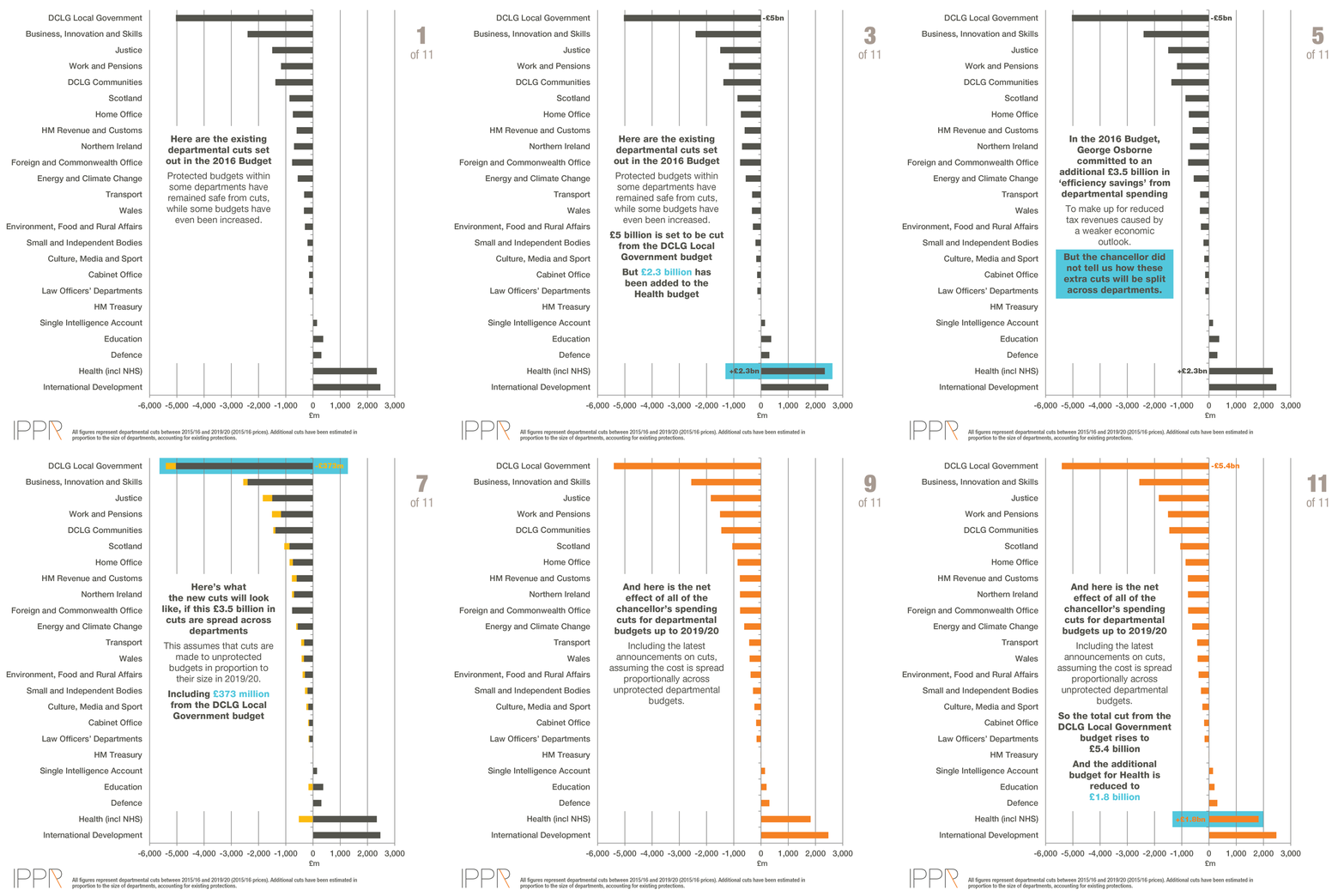
To help plug this gap in the public finances, the chancellor announced in today’s budget that there would be £3.5 billion (£3.3 billion in 2015/16 prices) in extra cuts to departments in 2019/20. Usually, a chancellor would accompany such an announcement with an explanation of which departments will be cut and by how much – but Osborne has not done that today. He has simply said that the government ‘will find’ £3.5 billion of savings, following an ‘efficiency review’, and that he will maintain the protections for certain areas of spending that he set out in the spending review last November.
The chart below presents IPPR analysis of what this might mean for department spending, assuming that:
- All existing departmental protections set out in the spending review remain in place.
- Further cuts to unprotected budgets are made in proportion to the forecast size of these budgets in 2019/20, as set out in the 2016 budget.
Notes
- All figures refer to resource departmental expenditure limits (RDEL).
- Protected budgets include: the NHS (within the Department of Health); schools, further education and early years (within the Department for Education); the Ministry of Defence; International Development; Police (within the Home Office and Local Government); adult education and science (within the Department for Business, Innovation and Skills); the Foreign and Commonwealth Office; and the Single Intelligence Account.
- Changes to devolved departments (Scotland, Wales and Northern Ireland) have been estimated using the Barnett formula, such that the total cut to RDEL in 2019/20 is £3.5 billion (in 2019/20 prices) smaller compared with the plans set out in the 2016 budget.
Related items

What comes next: A fairer approach to primary assessment
England’s primary school accountability and assessment system is not working well for disadvantaged children.
A durable majority?: How public opinion on the EU performs under pressure
A decade on from Brexit, Andy Burnham has signalled that a reassessment of the UK’s relationship with the EU might be around the corner.
New world, new relationship: Our future with Europe
Britain’s assumptions about its place in the world no longer hold, upturned by Russian aggression, American unreliability and Chinese coercion.