Article
The IPPR Commission on Economic Justice hosted a major conference on 14th November which posed the question ‘The UK Economy After Brexit: Working for All?’. Set in the City of London’s magnificent Fishmongers’ Hall, the all-day event attracted a packed audience with an impressive programme of keynote speeches, expert panels and focused discussions. The conference featured prominent political figures, including George Freeman, Tory MP and chair of the Conservative Policy Forum, and The Rt Hon John McDonnell MP, Shadow Chancellor of the Exchequer.
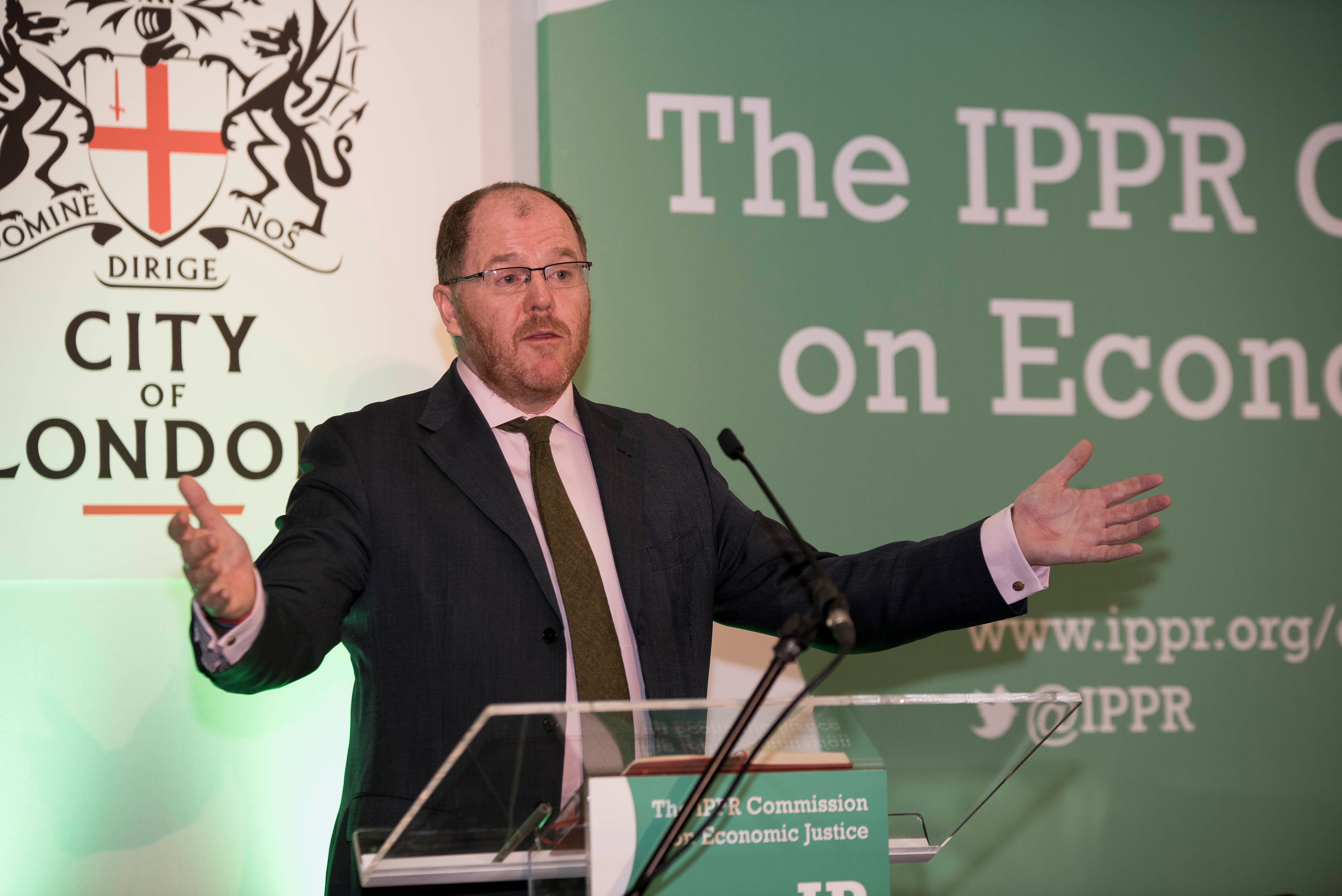
George Freeman warned of the UK having a ‘crisis of political economy’ which necessitated a ‘profound moment of urgent renewal’. Freeman described what he saw as ‘the real choice’ of post-Brexit politics, between a prosperous ‘innovation economy … driving an opportunity economy’ and ‘an old people’s home that couldn’t pay for itself’. He went on to outline the components of his two pronged renewal model; an ‘innovation economy driving an opportunity society’.
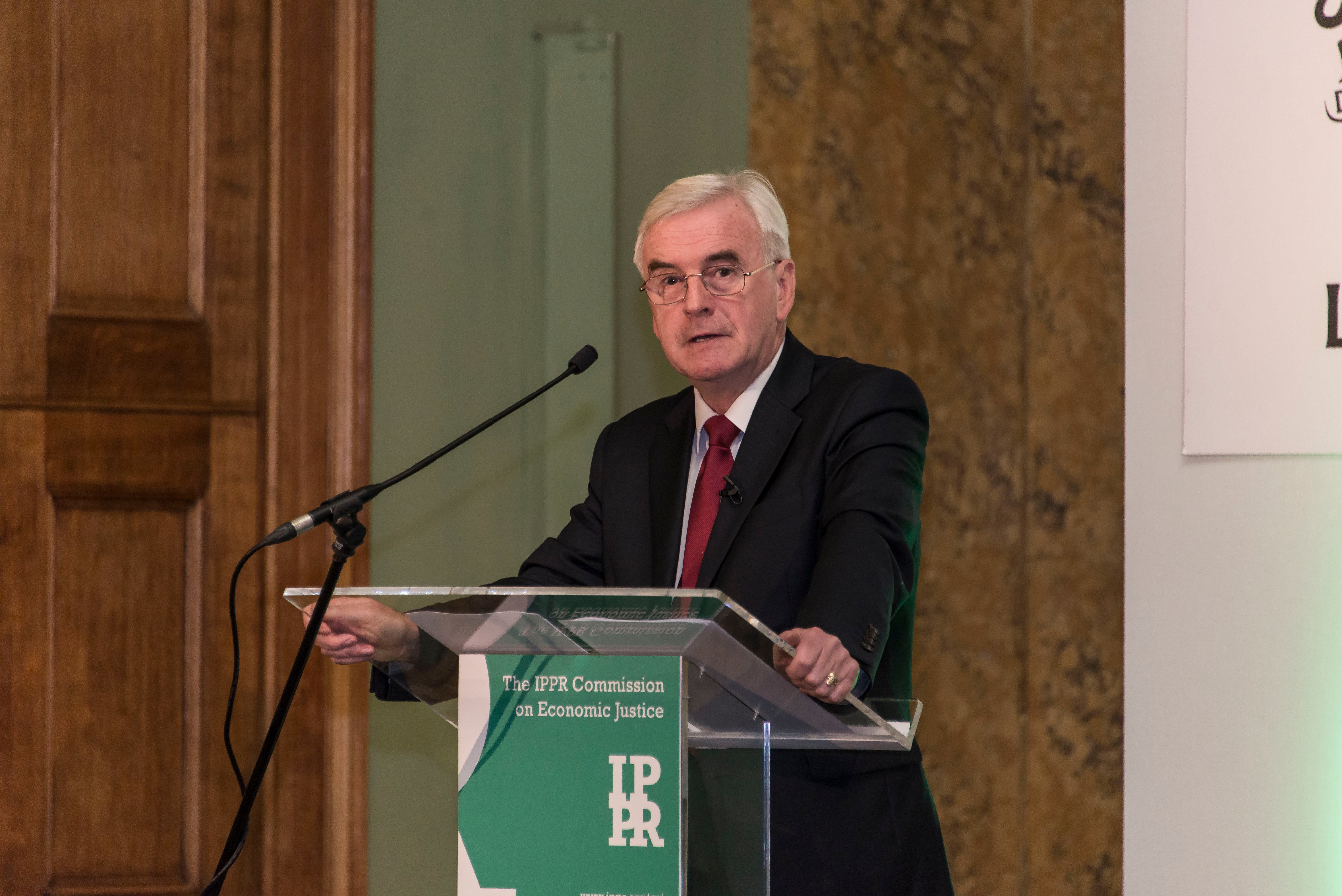
John McDonnell announced Labour’s plan to factor climate change risks into economic projections by acknowledging the fiscal risks of the ‘overwhelming challenge of climate change’ when considering the UK economy. The Shadow Chancellor explained the OBR would be given additional funding and guaranteed independence in order to ‘become a new centre of expertise for environmental macroeconomics’. McDonnell stated the UK economy ‘is working for almost nobody’, instead promoting ‘economic policy with a moral purpose’.
On the eve of the Autumn Budget, energetic panels explored pressing topics, such as Brexit and future prospects for the UK economy; industrial strategy, productivity and innovation; and labour markets and ‘good work’. Panels comprised experts and stakeholders from business, academia, trade unions and the press. Prominent speakers included Carolyn Fairbairn, Director-General of the CBI; Will Hutton, columnist at the Observer; Sir Charlie Mayfield, Chairman of the John Lewis Partnership; and Frances O’Grady, General Secretary of the TUC. The conference was rounded off by a lively discussion between Mariana Mazzucato, Professor of Economics at UCL, and Chief Economic Commentator of the Financial Times, Martin Wolf; moderated by Michael Jacobs, Director of the IPPR Commission on Economic Justice.
The IPPR Commission on Economic Justice’s interim report ‘Time for Change: A New Vision for the British Economy’ was widely cited and praised by many speakers for both its valuable insights into the current state of the UK economy and its proposals for how these should be tackled. This event was an all-round success, showcasing both the relevance of the IPPR’s research and function as a facilitator of progressive political debate.
IPPR would like to thank the City of London and Aviva for their sponsorship of this event.
IPPR will soon be putting up on this website some videos and podcasts of the conference.
Coverage of the two key note speeches
Guardian coverage of George Freeman’s speech ‘Tory policy chief warns of 'very real prospect' of national decline after Brexit’: https://www.theguardian.com/politics/blog/live/2017/nov/14/theresa-may-ally-accuses-hammond-of-vetoing-politics-promoting-economic-justice-politics-live?page=with:block-5a0ae00322c4a1070a15d272#liveblog-navigation
Guardian coverage of McDonnell’s speech ‘Labour vows to factor climate change risk into economic forecasts’: https://www.theguardian.com/environment/2017/nov/13/labour-vows-to-factor-climate-change-risk-into-economic-forecasts?CMP=Share_iOSApp_Other
Links to the two keynote speeches on YouTube
John McDonnell: https://www.youtube.com/watch?v=f1nYLVH3FF4
George Freeman: https://www.youtube.com/watch?v=PIjuZdSlYtA
Related items

Bricks vs clicks: The case for an online sales tax
It's time to rethink how we tax retail.
Beyond boom and bust: The supply case for social housing
How the government can use social housing to unlock housing supply and demand.
Aligning for growth? The benefits of an EU-UK mutual recognition agreement
Scoping the potential next frontier of a deepening relationship between the UK and the EU.