Stuck on you: How to make social media good again
Article
How social media has changed over the last 20 years to make us more isolated from each other online, and what needs to change.
Social media inarguably poses threats to democracy: disinformation and misinformation, polarisation, echo chambers, bots and rage-inducing algorithms. Excessive social media use and poor moderation can threaten our wellbeing and safety. There’s an understandably strong media focus on these severe harms and threats.
But for most people in the UK, social media treads more lightly on our lives. People watch and share videos, help each other in community forums and marketplaces, and keep up with family and friends. It’s important to examine how most people use and experience social media, and how newer patterns of use (driven by changes to these platforms over the last 10 years) have more quietly shaped our culture and politics in the UK.
This paper explores these changes: who these platforms show us, who they don’t show us, and what the cultural, democratic and political consequences might be. Importantly, we still have choices, and we need to make good ones.
We find that social media gatekeeping has changed over the last 20 years, and it has made us less visible to each other – and more isolated. If we’re more isolated from each other online, it's harder to see or make common cultures, reject norms or create new political norms.
We need to regulate social media platforms to make them less sticky, but we also need to accept that commercial social media will always be sticky, and come up with non-commercial, public alternatives that could offer us both entertaining and truly social online lives.
Recommendations
- Extend prominence requirements to social media platforms and expand them beyond news. The government should compel social media companies to not only make public service news prominent on these platforms, but also informational content from groups and organisations that benefit the public but are crowded out by the algorithm. Companies could be required to implement a public service content quota or a separate public benefit feed.
- Amend the Online Safety Act to prevent manipulative algorithmic design. The UK’s Online Safety Act (OSA) is focussed on harmful rather than deceptive design, compared with the EU Digital Services Act, which bans manipulative ‘dark patterns’ that often prioritise commercial relationships over social ones. Amending the OSA could give Ofcom and the government more freedom to target those big tech companies that are making these platforms less social.
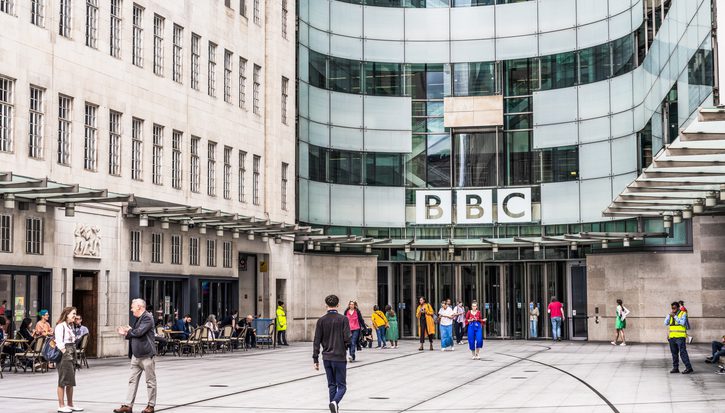
- Revive Open Door. The BBC should revive Open Door, a programme commissioned by David Attenborough, which ran from 1973–1983 and allowed interest groups to take control of a timeslot without editorial input. In the context of its charter renewal, reviving Open Door and making its content prominent on BBC social media channels would support the BBC’s social and connective mission.
- Encourage the BBC and other UK and European public service broadcasters to explore the development of a new public social media platform with the objective of public social benefit rather than commercial time-on-platform. This platform could integrate news, entertainment and social features rather than acting as a solely civic or informational space.
- Make it easier for the BBC and public service broadcasters to compete. Competition assessments are constraining innovation and aren’t fit for purpose in a landscape where large tech companies can operate with little constraint. The government could simplify the Public Interest Test and introduce a public digital infrastructure exemption in competition assessments, allowing public broadcasters to collaborate and challenge the dominance of big tech companies.
Related items

Levelling the playing field: The BBC, Big Tech, and the case for a bold charter
The upcoming charter renewal is the moment to give the BBC the resources, freedom and mission it needs to engage with technology firms on its own terms.

Britain's strategy for a decade of danger: Our nation, our continent, our world
Britain's foreign policy needs a grand strategy that clearly defines the country’s strategy for security, growth and migration.

AI's got news for you: Can AI improve our information environment?
Artificial intelligence is rapidly transforming our information environment and becoming a new front door through which the public access the news.