Brexit 10 years on: Time the North took back control through devolution
Article
Why does 'take back control' not extend to devolution?
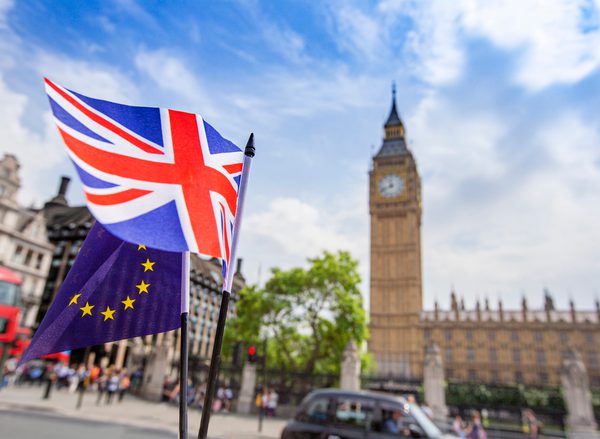
Today marks 10 years since the UK’s referendum on whether to leave or remain in the European Union. Into the mixing bowl went a background of austerity, NHS promises, notions of identity, a sense of threat, and frustrations around being controlled by the decisions of external powers in Brussels - and out of the oven came a successful leave campaign with a strong story, a big red bus, and a snappy slogan to 'take back control.'
Prime minister Sir Keir Starmer acknowledged this effective narrative, when in 2023 he argued the need for control was the “something very important sitting behind that leave vote”. He promised to turn the slogan into a solution and "bring forward the ‘take back control bill’ to deliver it in action”, directly linking the EU referendum to devolution. Since gaining power, the government has built on this need to 'take back control' with the 2024 English devolution white paper calling for deeper devolution on the grounds it will “empower communities to take back control from Westminster”. And that ‘take back control bill’ he promised? The now (less-snappily) named English Devolution and Community Empowerment Act 2026.
England is one of the most centralised places in Europe, and English regions are subject to decisions made in Westminster and Whitehall. The impact is clear in the North – it has been ‘left behind’ by the centralised system, which has produced no shortage of regional inequality. If areas with high levels of deprivation were more likely to vote Brexit, then surely, we’d all be snapping up devolution like the last party ring at a buffet?
Yet, the opportunity to truly 'take back control' – through devolution – is not necessarily being met with the same public vigour
Yet, the opportunity to truly 'take back control' – through devolution – is not necessarily being met with the same public vigour. Turnout in mayoral elections remains low, and has failed to reach 30 per cent in half of all the Mayoral Combined Authorities (MCA) elections that have taken place since 2017. In fact, turnout went down in the 2024 elections for five of the six pre-existing strategic authorities. Devolution has the potential enhance democracy and increase turnout, but this does not appear to be happening, with IPPR North research showing there is a real danger that devolved government is appearing to citizen’s to be as remote and unresponsive as Westminster.
So, what gives?
Why does 'take back control' not extend to devolution?
Devolution isn’t a magic pill: The leave campaign pitched Brexit to the people as a ‘one and done’ divisive vote, a magic-pill solution, a bus to hop on to an easy destination. Devolution isn’t like that and, arguably, neither was Brexit. It’s slow and procedural, with a piecemeal and incremental roll out and powers that vary regionally. Plus, the newness of mayoral combined authorities means the jury’s still out.
The 'taking back control' narrative is new for devolution: Since the devolving of powers to MCAs in 2016, devolution has been framed economically: it would “support local areas to address productivity barriers” as opposed to bringing decisions closer to communities. In the 2024 English devolution white paper, it framed 'taking back control' as “absolutely essential for growth”. Only recently has devolution been presented as an answer to regional inequality and power imbalance, and the message is yet to cut through publicly.
It remains detached from everyday people: For many people, devolution is top-down politics in a new building, merely the geographical moving of power from one political institution to another – and they’ve not been convinced otherwise. Positive benefits of regional leaders and devolution exist (such as the boost to Greater Manchester’s economy) but arguably these are not necessarily being seen in people’s daily lives as noticeable as your passport changing since Brexit.
So, what do we do about this?
Devolve more powers: Undoing centralisation and decades of regional decline is a long-term process that requires increasing powers, resources and accountability. Currently mayors' powers, and how much is in their pot to fund those changes, are still decided in Westminster. Fiscal devolution is a necessary step to change this.
Deliver a 'double devolution': For many people, the desire to take control is not a specific grievance against Westminster or the EU. Rather, it’s a desire for personal agency. A grievance of having decisions made for us, not by us by the ‘powers that be’ more generally. Devolution must prove itself as different by ensuring decision-making powers are put in the hands of everyday people. IPPR North recommends that government should allow communities the right to request powers from unitary and strategic authorities, roll out community-led neighbourhood boards, and be innovative around making democracy hyperlocal.
But make this accessible: Devolution itself still feels like a Westminster buzzword that isn’t easily understandable or tangible. It’s often defined through words like ‘net zero’ and ‘franchising’, when most people want to know how it could make their weekly shop lower, get them a job that pays well, or be able to afford childcare. Even new (and very welcome) powers through devolution like community right to buy, and how to practically enact them, remain mysterious those who might otherwise think “we could buy that empty pub.”
Only when people are engaged in their communities and have a genuine say in their lives will have taken back control. When this happens, devolution will build its own story that brings people to the polling station - but maybe a big red bus would help.